Written by Ryan Waterfield
After the Parkinson’s Diagnosis
My family is living with a new reality and it looks something like this:
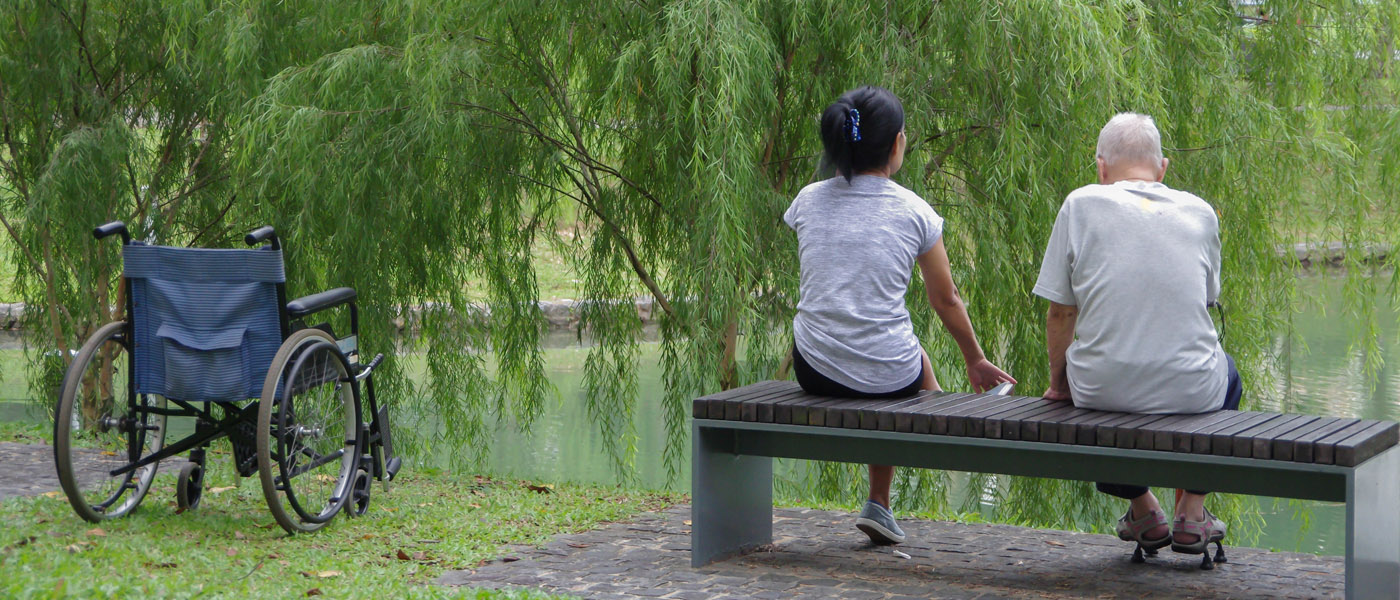
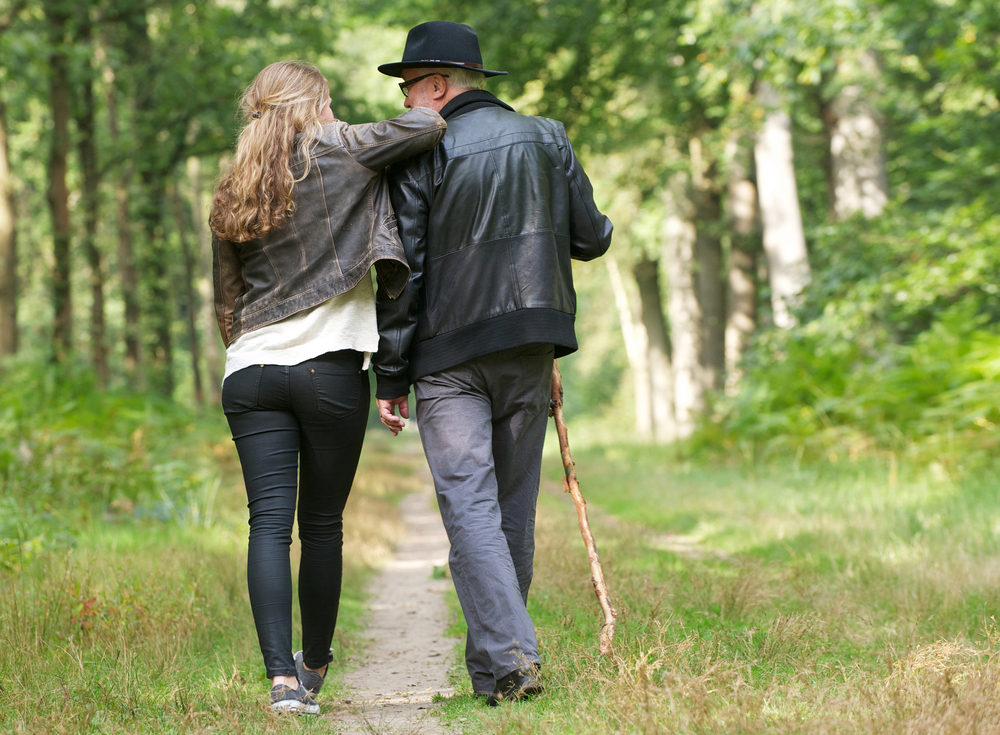
Two years ago, my 72-year-old father and I were hiking 3,000-foot mountains together. One year ago, my dad was having trouble with his balance. Instead of hiking trails, we were taking long walks out dirt roads. Today, my father can’t walk without a walker, and even when assisted, he goes no farther than from the bed to the bathroom—that’s about 15 shuffling steps if you’re counting.
My father—the CEO of a public company, a beautiful public speaker, a community leader, a hands-on father of four and grandfather of eight, the man who taught my three siblings and me how to shoot a basketball, how to play defense, and how to make a mouthwatering grilled cheese sandwich—can’t bathe himself, or dress himself, or put on his own shoes. His speech is slurred. His facial expression is flat.
The reason behind this decline? Parkinson’s Disease. But we didn’t figure that out until the disease had taken its insidious hold; we operated for too long under the impression that his problems had to do with his back, and he went in for back surgery. After the surgery, my dad’s mobility and ability to take care of himself sharply declined and he has needed 24-hour care since.
Now that we have the accurate diagnosis, we are told that, with dopamine-boosting medication such as Levodopa or Ropinirole, he might improve. We’re told that, with the right sort of physical therapy, he could gain some of his mobility and some of his independence back. But we’re just getting used to this. The diagnosis is only a few months old.
Since the diagnosis, my family and I have been in a crash course in elderly care, patient advocacy, and self-awareness. Since the diagnosis, we’ve been learning to live with a new reality, and we’ve been trying to help my father learn to live with it as well. Part of that new reality is a regimen of pills, some for pre-existing conditions, and some to deal with the dopamine deficiency, the anxiety, and the depression that often comes with Parkinson’s. Not only can being dependent on so many medications overwhelm the patient and the caretakers, it can overwhelm the wallet. SimpleFill’s prescription assistance program helps us manage the stresses of this new reality.
After the diagnosis of a neurodegenerative disease like Parkinson’s, it’s only natural to second guess the doctors. To run back over all the signs that we—his family, his doctors, and his physical therapists—missed for months, for years. It’s only natural to want to place blame on someone including ourselves. After we got past the what-if’s, we learned to arm ourselves with knowledge; we have become frequent visitors to sites like the Michael J. Fox Foundation and the National Parkinson’s Foundation in an effort to become an expert on something that prior to the diagnosis we only had a passing familiarity with.
According the doctors and the websites, the progression of Parkinson’s varies from individual to individual. But there are some factors that can accelerate the disease. My father experienced all of them: psychological stress, physical traumas (like back surgery), and going under general anesthesia.
We’ve also learned that there are significant non-motor symptoms that go along with Parkinson’s even though it’s mostly known for its impact on a patient’s motor functions. These non-motor-related symptoms include depression, anxiety, sleep behavior disorders, constipation, loss of a sense of smell, and cognitive impairment. We’re learning that the depression and anxiety can be as debilitating as the motor symptoms.
The doctors we have talked with have emphasized how hard this disease is to diagnose; especially the early stages of Parkinson’s. My father’s physical therapist says that she sees many patients whose first signs of trouble presented as back issues. There are some key physical signs to watch for. If you or a loved one are experiencing any of these, please bring it to the attention of a doctor. The earlier you can start treating Parkinson’s, the better.
- Tremor, mainly at rest and described as pill rolling tremor in hands. Other forms of tremor are possible.
- Slowness of movements (bradykinesia)
- Limb rigidity
- Gait and balance problems. Doctors have coined the term “Parkinson’s Gait” to describe the shuffling walk that many Parkinson’s patients, including my father, develop.
- A “flat” face or slack expression
- Slurred speech
Because my father’s symptoms generally affected one side of his body, we thought he’d had a stroke. Once he was cleared from that possibility, we didn’t ask the next question before going ahead with his back surgery. We didn’t ask what else could be causing all of these symptoms if not the back issue and if not a stroke. That was our first hard lesson in the importance in advocating for the patient and empowering the patient to advocate for himself. Trusting your doctors does not mean relinquishing all responsibility. I’ve learned that it’s important to trust your own instincts and educate yourself.
Parkinson’s by itself is not fatal. But finding a way to help my dad get back a life he recognizes is key to his survival—and ours. We’re two months into it and we’re just learning what it means to live with Parkinson’s. Working our way to the right doctors and physical therapists. Learning the right questions to ask, the right strategies for coping.
If we can help my father feel engaged rather than isolated, relevant even though he can’t contribute in the ways he used to, and independent even though he has to ask for help, I think we’ll be on the right track. My dad and I can’t spend our time on the trail together anymore, but we’re certainly climbing another sort of mountain now.